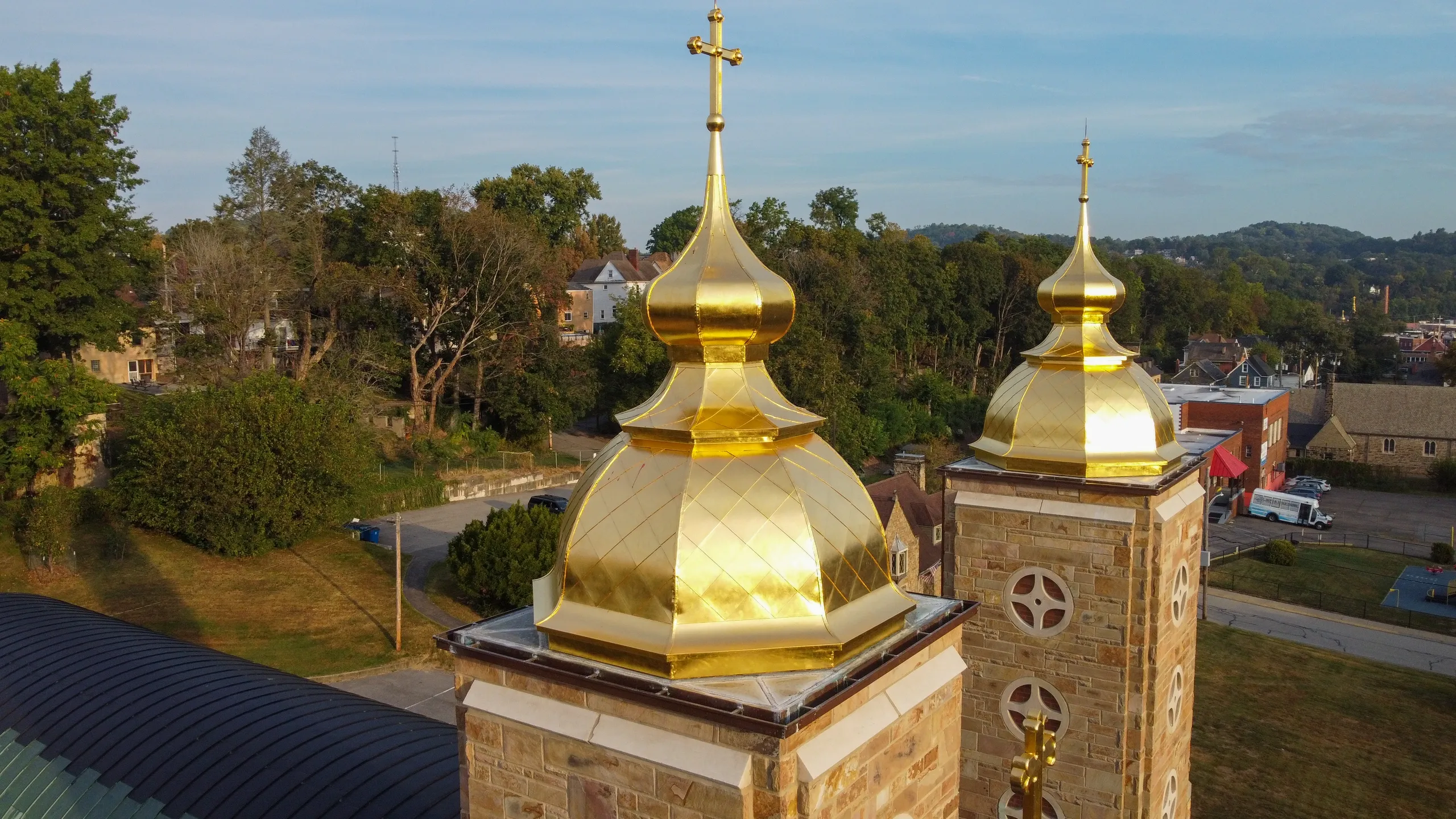
Holy Trinity Ukrainian Catholic Church is a small Ukrainian Catholic parish in Collier Township, Pennsylvania, whose members belong to an ancient Eastern Christian tradition rooted in Ukraine and worship according to millennia-old liturgical customs.
Ukrainian Catholic refugees, escaping Soviet-era persecution in the 20th century, came to Collier Township seeking a place where they could freely practice their faith and maintain their traditions. They purchased a 41‑acre parcel and, beginning in the 1950s, started developing the land as a cemetery. By 2023, Holy Trinity was prepared to broaden the religious use of its property by adding a chapel and related facilities so that parishioners and other Ukrainian Catholics could gather there for prayer and worship in their own liturgical tradition.
Those plans stalled when Collier Township rejected most of the church’s proposed development and imposed burdensome conditions that do not apply to nonreligious entities. The Township zoning code is unconstitutional in both the way it is written and in the way Collier Township applied it to Holy Trinity.
The zoning ordinance prohibits the construction of churches anywhere within the township as a matter of right, while allowing many other uses as of right. In fact, in the same zoned district as the Holy Trinity property, commercial schools, health clubs, amphitheaters, ice or roller rinks, and professional offices are permitted as of right.
Township officials also arbitrarily limited the size and height of any building Trinity sought to construct. They refused to let them use any building they would build for religious services and attempted to limit any use other than funerals. The Township also told the church that if they built a bell tower, it could not be used to commemorate the daily hour of mercy at 3:00 pm or for any other services beyond funerals or memorial services. To make it worse, the township purported to limit memorial services to “persons deceased after June 9, 2025.” On All Souls’ Saturdays, the Church honors all those who have died, even those who died before June 9, 2025. This condition prevents the Church from doing so. The Township has substantially burdened the Church’s ability to follow a central tradition of honoring the dead, regardless of when they died.
Yet less than a mile away and in the same zoning district, the local carpenters’ union operates a 19‑acre campus with classrooms, conference rooms, offices, a cafeteria, an event space, and a meeting room that seats 400 people. The Township’s zoning code permits similar secular uses—such as amusement parks, ice rinks, fitness centers, and country clubs—as of right in the same zoning district, while denying churches the same treatment.
Collier Township is violating the church’s First Amendment Free Exercise rights and the Religious Land Use and Institutionalized Persons Act by imposing strict limitations on the church while allowing comparable secular activities and neighboring organizations free rein.